- Teacher: Ahmedabad Group of Institution
- Teacher: Dr. Simran Sikh
Ahmedabad Group of Institutions
-
MIS
Studying Information Systems and Business Analytics will help students with essential skills to harness data-driven insights for strategic decision-making. It enhances their ability to leverage technology effectively, leading to competitive advantages in today's digital business landscape. Mastery of these subjects prepares future managers to navigate complexities and innovate within organizations, ensuring sustainable growth and operational excellence.
Available courses

By understanding strategic management principles, individuals can better understand the dynamics of business, adapt to changing environments, and contribute to longterm organizational growth.
- Teacher: Indrani Biswas
- Teacher: Ahmedabad Group of Institution

Students, who go for the ‘International Experience Program (IEP)’during Summer vacation under
GTU approved arrangements, shall prepare a report on any business they study in that country and
submit a report and get evaluated for it at the foreign University itself. The report which is prepared at the foreign University shall be considered as SIP report for evaluation purpose. The SIP guidelines mentioned here are not applicable to students who go for IEP as they have to prepare a report
in the foreign University as per foreign University norms (if any). However, students have to follow formatting guidelines as mentioned herein and attach a copy of the certificate awarded by foreign University/ Organization at foreign country during IEP, as an annexure in the project report.
- Teacher: Ahmedabad Group of Institution
- Teacher: Dr Rajeev Singh
- Teacher: Dr Himashi Tolani

Studying Information Systems and Business Analytics will help students with essential skills to harness data-driven insights for strategic decision-making. It enhances their ability to leverage technology effectively, leading to competitive advantages in today's digital business landscape. Mastery of these subjects prepares future managers to navigate complexities and innovate within organizations, ensuring sustainable growth and operational excellence.
- Teacher: Ahmedabad Group of Institution
- Teacher: Dr Rajeev Singh
- Teacher: Dhara Dalal

Studying Information Systems and Business Analytics will help students with essential skills to harness data-driven insights for strategic decision-making. It enhances their ability to leverage technology effectively, leading to competitive advantages in today's digital business landscape. Mastery of these subjects prepares future managers to navigate complexities and innovate within organizations, ensuring sustainable growth and operational excellence.

- Teacher: NIRALI SHAH
- Teacher: Dr Himashi Tolani
- Teacher: Janki Doshi

Marketing Management provides the essential foundation for understanding
Integrated Marketing Communication (IMC). It equips students with key concepts such as consumer behavior, segmentation, targeting, positioning, and the marketing mix, all of which are critical to developing effective communication strategies. IMC builds on these principles to integrate various promotional tools like advertising, sales promotion, public relations, and digital media into a cohesive message. A strong grasp of marketing fundamentals enables students to align communication strategies with broader marketing objectives, understand target audiences, and
evaluate message effectiveness—making Marketing Management a vital
prerequisite for successfully studying and applying IMC concepts.
- Teacher: Ahmedabad Group of Institution
This is an advanced course in the domain of marketing and hence pre requires
knowledge of basic management concepts.
- Teacher: Ahmedabad Group of Institution
- Teacher: Dr. Rakesh Sarvaiya

Understanding consumers is at the heart of successful marketing. This subject helps students learn why consumers make certain choices—what they buy, how they decide, and what influences them. By drawing insights from marketing, psychology, and behavioral sciences, Consumer Behaviour helps in designing better products, messages, and experiences. It equips students to think from the consumer’s perspective and make smarter marketing decisions.
- Teacher: Ahmedabad Group of Institution
- Teacher: Dr Rajeev Singh

This course is designed to equip MBA Finance students with comprehensive
knowledge and practical insights into financial derivatives and their role in risk
management. The course focuses on the understanding, mechanics, valuation, and strategic use of derivatives to manage various types of financial risks including currency risk, and commodity price risk. It balances conceptual frameworks with analytical tools and real-world application.
- Teacher: Ahmedabad Group of Institution
- Teacher: Dr Himashi Tolani
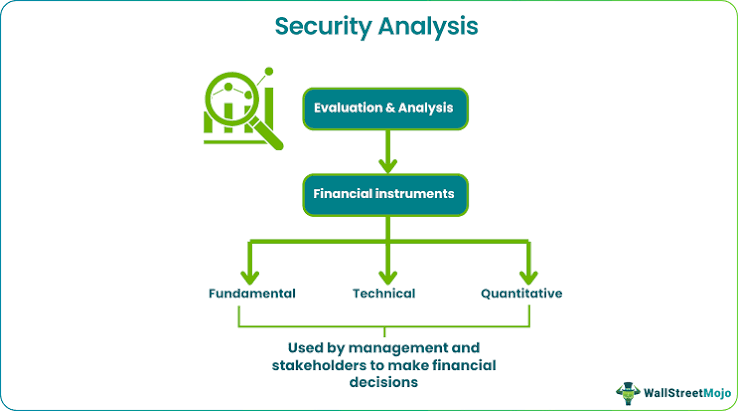
The course on Security Analysis and Portfolio Management (SAPM) provides
students with a foundational understanding of investment decision-making, riskreturn analysis, and portfolio construction. It covers key topics such as security valuation, fundamental and technical analysis, and modern portfolio theory. The course introduces tools like CAPM, APT, and Sharpe’s model to evaluate and optimise investment portfolios. It also explores recent trends, such as behavioural finance and market anomalies. SAPM equips students with the analytical and practical skills required for careers in investment, equity research, and portfolio management.
- Teacher: Dr. Viral Bhatt
- Teacher: Ahmedabad Group of Institution
- Teacher: NIRALI SHAH
- Teacher: Dr Rajeev Singh
- Teacher: Dr. Simran Sikh
- Teacher: NIRALI SHAH
- Teacher: Dr Rajeev Singh
- Teacher: Dr Rajeev Singh
- Teacher: Janki Doshi
- Teacher: NIRALI SHAH
21
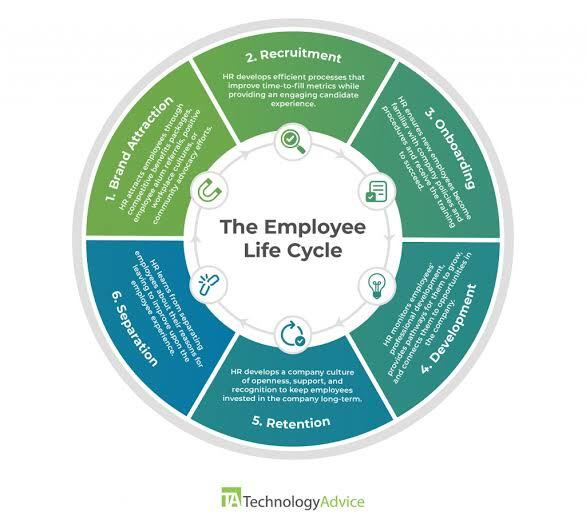
st century is a century of change and development. Rapid change and intense
competition have made workplace very demanding and dynamic, which had led to higher rate of turnover of the employees at the different levels and increased issues with work life balance of an employee. Toxic workplace and high demand at work place have resulted in to the physical and mental health issues of an employee and hence resulted in reduced performance. Employee life cycle management helps at a great length to address this issue.
- Teacher: Indrani Biswas
- Teacher: Ahmedabad Group of Institution
- Teacher: NIRALI SHAH

21st century is a century of change and development. It is very essentials for
organization to cope up with changing trends/ Technologies, customer needs and get itself adapted in a way, so that organization can have competitive advantage. HRD is a very crucial process for this up gradation and adaptation. Human Resource Development will assure Right person at Right Place at Right time.
- Teacher: Dr. Mukshita Dhrangadharia
- Teacher: Ahmedabad Group of Institution
- Teacher: Dr. Mukshita Dhrangadharia
- Teacher: Ahmedabad Group of Institution
- Teacher: Dr. Rakesh Sarvaiya
- Teacher: NIRALI SHAH
- Teacher: Dr. Simran Sikh
- Teacher: Dr Rajeev Singh
- Teacher: Dr Himashi Tolani
- Teacher: Bhakti Bhavsar
- Teacher: Indrani Biswas
- Teacher: Dr. Viral Bhatt
- Teacher: Dhara Dalal
- Teacher: Dr. Simran Sikh

- Teacher: Bhakti Bhavsar
Marketing Management-Unit-1-Test
- Teacher: Dr Rajeev Singh
- Teacher: Indrani Biswas
- Teacher: Dr. Rakesh Sarvaiya

- Teacher: Janhvi Upadhyay
- Teacher: Dr Rajeev Singh
- Teacher: Prof. G. K. Viju
- Teacher: NIRALI SHAH
- Teacher: Dr. Simran Sikh
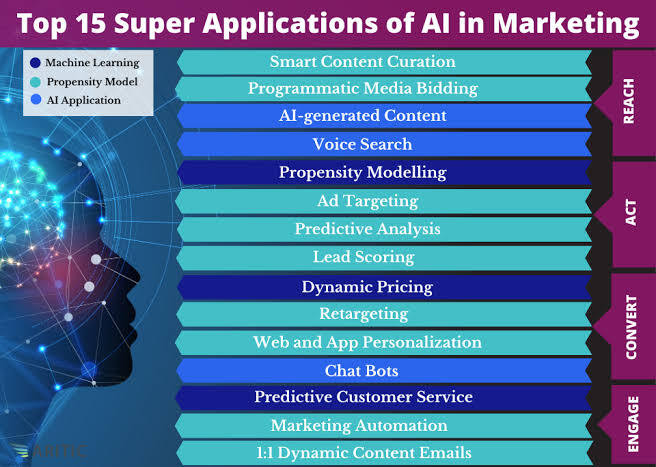
With the rapid integration of Artificial Intelligence in business, marketing functions are increasingly driven by data, automation, and intelligent decision-making systems. This course equips students with foundational knowledge and practical exposure to AI applications in marketing, enabling them to understand consumer insights, personalize strategies, and leverage AI tools ethically and effectively in real-world business scenarios.
- Teacher: Ahmedabad Group of Institution
- Teacher: Dr Rajeev Singh

This course is designed to equip students with a strong foundation in sales
management by developing their understanding of sales manager roles, personal selling, sales force organization, motivation, performance evaluation, and emerging trends in sales. It connects theoretical concepts with practical activities such as sales pitches, training programs, compensation plans, territory design, and sales performance analysis, helping students build skills required for effective sales planning and execution in modern business environments.
- Teacher: Ahmedabad Group of Institution

The subject of Consumer Behaviour helps students understand the behavioural aspects of marketing and the factors that influence consumer needs, wants, desires, and decision-making. The course explains how consumers behave in different buying situations based on cultural, social, personal, and psychological factors. It enables students to analyse customer needs, preferences, and buying patterns, which are important for developing effective consumer-oriented marketing strategies. The subject also helps students understand how to create customer value and improve customer satisfaction in a competitive marketing environment.
- Teacher: Ahmedabad Group of Institution

- Teacher: Ahmedabad Group of Institution
- Teacher: Dr. Simran Sikh
- Teacher: Dr Himashi Tolani

Logistics & Supply Chain Management equips students with essential knowledge and
skills in managing complex supply chain networks efficiently. Understanding supply
chain dynamics is integral to leveraging data analytics effectively in business
decision-making processes. Students gain insights into optimizing inventory,
transportation, and distribution channels, enhancing operational efficiency. The
course bridges theoretical knowledge with practical applications, preparing students
for real-world challenges in logistics & supply chain management. It enables students
to comprehend the interdependencies within supply chains and devise strategies for
mitigating risks and improving resilience. Overall, Logistics & Supply Chain
Management empowers students to contribute meaningfully to organizational success
through informed supply chain management practices.
- Teacher: Ahmedabad Group of Institution
- Teacher: Dr. Rakesh Sarvaiya
- Teacher: Dhara Dalal

This course provides an in-depth understanding of the structure, functioning, and significance of financial markets, the variety of financial products available, and the diverse range of financial services offered. It aims to equip students with the knowledge and analytical skills necessary to navigate the complex financial environment. The course covers major financial markets and explores the characteristics and applications of key financial products and financial services.
- Teacher: NIRALI SHAH
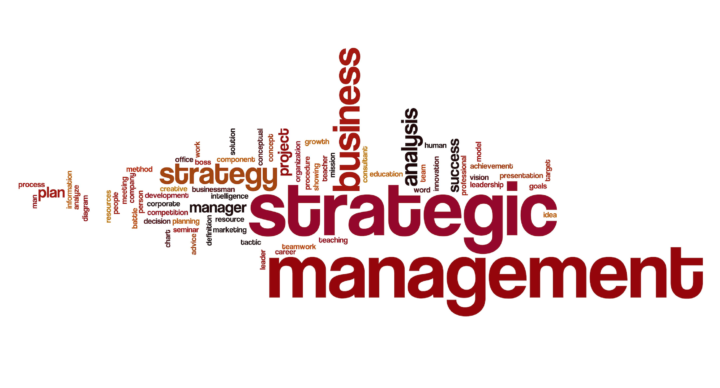
This course focuses on the important current topics / trends / issues in strategic
management. The students will understand the fundamental sequence of strategy formulation, implementation, and evaluation. Also the students learn the relationship between vision/mission to internal/external environmental scanning, to strategy development based on resources and external environment. Course has been designed in a way that students can learn the analysis and interpretation of business environment and can understand strategic practices adopted by the firms at Functional level, Business Level, Corporate level and Global level.
- Teacher: Dr. Mukshita Dhrangadharia
- Teacher: Janki Doshi
- Teacher: Dr Rajeev Singh
- Teacher: Dr Rajeev Singh
- Teacher: NIRALI SHAH
- Teacher: Prof. G. K. Viju
- Teacher: TRUPTI THAKKAR
- Teacher: Jagruti Koyatiya
- Teacher: Meghna Vaidya
- Teacher: Tushar Gajjar
- Teacher: Jagruti Koyatiya
- Teacher: Dr. Vishal Modi
- Teacher: Ravisha Suthar
- Teacher: Jagruti Koyatiya
- Teacher: Ravisha Suthar
- Teacher: Meghna Vaidya
- Teacher: Prof. Bhoomi Patel